

Building tech used to demand heavy upfront server commitments, sprawling specialized engineering teams, and months spent simply preparing infrastructure.
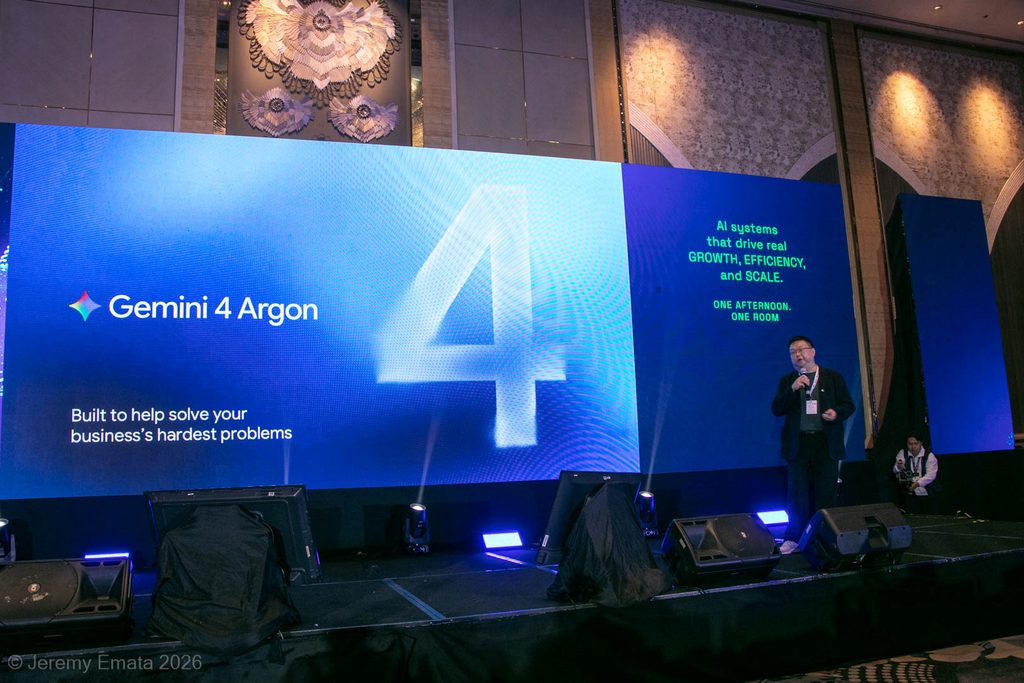
At AI Vision Forum (AIVF) Manila 2026, held on October 28 at Shangri-La The Fort in BGC, the conversation moved decisively away from abstract hype and anchored itself in practical execution.
Organized by AI Vision Global Alliance Limited alongside The Hong Kong Polytechnic University Hangzhou Technology and Innovation Research Institute, the forum drew over 500 business leaders, founders, and enterprise decision-makers around a single pragmatic theme: building AI systems that deliver real growth, operational efficiency, and sustainable scale.
The most prominent thread across the afternoon was how rapidly the barrier between an initial concept and live production is collapsing.
Digital teams no longer need substantial headcount to launch and maintain complex systems. Platforms like HowOne, presented by SVP and Product Lead Daniel Chen, demonstrated agent-native tools built for the “One-Person Company,” enabling solo creators to describe software requirements in plain language while autonomous agents handle development, deployment, and ongoing operations.
In creative media, tools like Duck Reels revealed how production pipelines for short-form streaming dramas on apps like DuckVerse can compress what once required an entire crew, rigid timelines, and steep budgets into agile, AI-assisted workflows.
Traffic generation, customer acquisition, and operational support are seeing similar agentic upgrades. Rather than relying on disconnected point solutions, the systems highlighted at AIVF focused on continuous operational loops.
TRXY and A3SEO showcased 42 autonomous AI agents collaborating with human SEO strategists to monitor site health, correct rank drops, and localize web assets across dozens of languages.
RunLink and R2Y2 tied traffic generation directly to commercial conversion funnels, while Soric’s CustomerOps platform demonstrated real-time, unified messaging across WhatsApp, Viber, and Messenger to handle large inquiry volumes in English, Filipino, and regional languages.
Moving beyond basic customer support, workflow demos like S.H.I.E.L.D. illustrated how AI is entering judgment-heavy, regulated domains—evaluating complex work-injury insurance claims to empower human adjudicators rather than attempting to replace them.
Underneath these applications lies an infrastructure layer that must stay dependable and cost-efficient. Keynotes from distributed database provider TiDB (PingCAP) and unified observability suite TrueWatch emphasized that modern enterprise AI requires architectures capable of handling real-time transactional data, vector search, and live system monitoring in a single environment.
During the Cloud Tech Panel—featuring representatives from Alibaba Cloud, Cloudflare, Huawei Cloud, and Oracle—the consensus for Philippine enterprises was clear: ditch over-provisioning.
By leveraging cloud capacity that scales on demand alongside strict adherence to the Data Privacy Act of 2012, local companies can launch ambitious experiments with low upfront investment and pay strictly as user traction arrives.
Following its debut in Kuala Lumpur and this Manila edition, the forum series is set to travel next to Barcelona and Hong Kong. For Philippine builders and enterprises watching the space, the overarching takeaway from BGC was refreshingly actionable: avoid the temptation to overhaul an entire company all at once.
The smartest path forward is targeting a single bottleneck—whether in customer service response times, document processing, or inbound marketing—deploying focused AI agents to handle the load, and letting backend infrastructure expand in lockstep with measurable results.